


By Mehmet Enes Beşer
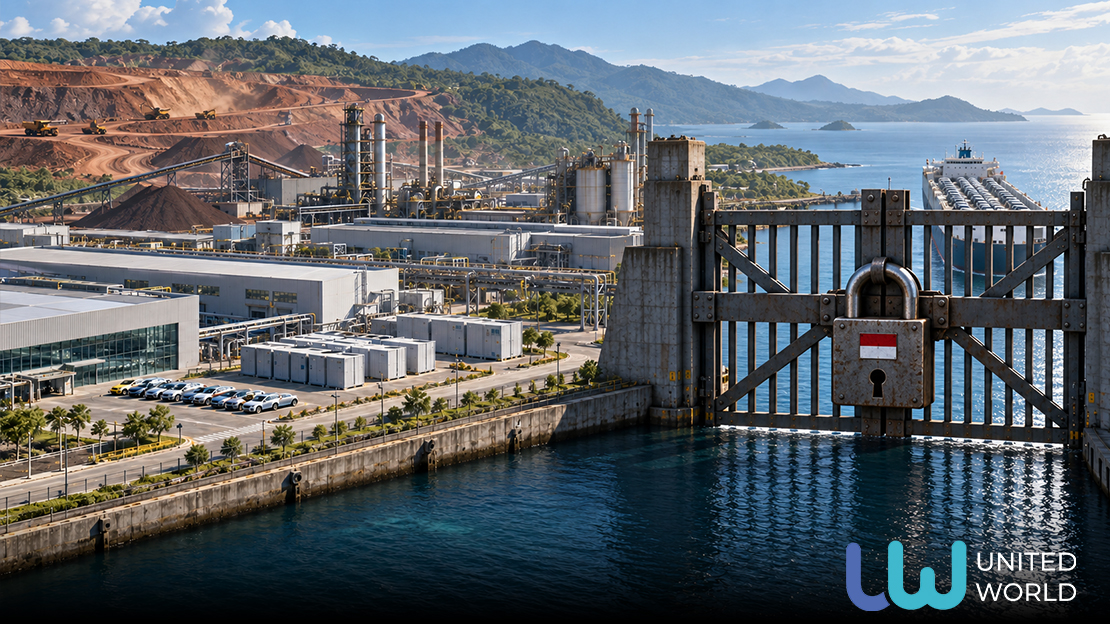
One of the largest Southeast Asian economies and a significant growth engine in the region is Indonesia. Today, this state is revising its participation in the global trade system, increasingly becoming more protective and selective. Under President Widodo’s presidency, the country pursues a nationalistic and restrictive industrial policy aiming to industrialize the economy, add more value, and gain greater control over economic destiny.
Although this approach seems rational, it poses certain risks. For example, Indonesia may experience strategic mismatch with trading partners, ineffective exploitation of its comparative advantages, and lower flexibility in the modern interconnected global economy.
For instance, during the current administration, the government banned the export of nickel, an important commodity for the country. As a mineral resource leader and the biggest owner of global nickel reserves, the Indonesian government has stopped exporting nickel ore, thus compelling companies to engage in domestic processing. There are reasonable arguments in favor of this decision: rather than exporting minerals in low value and purchasing processed goods later, the country has been trying to develop a downstream industry, particularly in the manufacturing of batteries and electric cars.
According to the results obtained, the policy has succeeded so far since large amounts of foreign investments from China, South Korea, and others have been made to establish facilities for nickel smelting and production of batteries. Thus, this move allows Indonesia to play a vital part in the global transition towards green energy and electric transport due to increasing demand for EVs.
Despite positive outcomes of the policy, one needs to understand that this step also carries risks. Recently, the European Union challenged Indonesia’s nickel ban at the World Trade Organization arguing that the measure goes against free-trade principles. The WTO issued its decision in favor of the EU in the late fall of 2022, although Indonesia appealed. Furthermore, other jurisdictions are treating Jakarta’s policy in a similar way showing increasing caution due to unpredictability, regulatory opacity, and aggressive nationalistic rhetoric. The latter causes investor uncertainty and affects negotiations on bilateral trade agreements.
Even more, the protectionist policy of the government undermines its ability to become a leader in regional and international economic discussions. Indonesia is already participating in the RCEP framework. Moreover, joining the Comprehensive and Progressive Agreement for Trans-Pacific Partnership has also been considered recently. Nonetheless, participation in such organizations presupposes not only market access but also commitment to free trade. Otherwise, Indonesia’s reputation and credibility as a trade partner will be undermined.
Another problematic area concerns the government’s policy of import substitution especially in the manufacturing and agriculture sectors. Some measures aimed at curbing imports of consumer goods and promoting local production are based on the rationale that the country should not be dependent on external trade. However, many Indonesian firms use imported equipment and intermediary products. It means that restrictions will affect production negatively and decrease competitiveness of businesses.
In addition, Indonesia’s infrastructure and human capital are still far from being enough for the country to achieve its goals. Implementation of an industrial policy without simultaneous improvement of educational systems, logistics infrastructure, innovative ecosystem, and regulation might generate rent-seeking behavior, inefficiency, and elite capture. Protectionism always favors incumbents and politically-connected firms. Instead of them, an entrepreneurial and competitive private sector needs to be encouraged.
From a diplomatic perspective, Indonesia’s protectionist approach may lead to negative consequences as well. As Indonesia remains a member of ASEAN, the organization with its strong commitment to the process of regional integration and a rules-based order, the actions taken might contradict the common agenda of the association. While Vietnam, Malaysia, and Thailand promote the concept of export-led growth, Indonesia deviates from this process, which can harm ASEAN cohesion in trade negotiations.
Obviously, Indonesia is not wrong to try getting the best out of its natural resources, especially as it is becoming increasingly common to rethink trade policy in terms of economic security and industrialization. Yet there is a difference between industrial policy and protectionism.
What Indonesia needs now is not only to get benefit from its endowments but also stay open for trade and foreign investment. Selective and controlled protection coupled with performance indicators can allow to form local industrial champions without provoking trade partners’ irritation. Transparency of policymaking and consistent legislation may help in creating a favorable investment climate for businesses.
Conclusion
Protectionism of Indonesia implies a set of ambitions related to economic development, resource utilization, and strategic independence. However, as with many things in life, it should be balanced. Economic self-sufficiency is neither realistic nor desired nowadays. Rather, the country needs to focus on achieving resilience in trade rather than isolation.
In case Indonesia continues taking too protective measures, perceiving trade partners as enemies and global markets as battlegrounds, its economic independence may become less accessible. In contrast, a mix of autonomy and openness, as well as nationalism and pragmatism, could help in not only becoming a regional leader but also in creating a development model for other nations to follow.