


From New Delhi / India
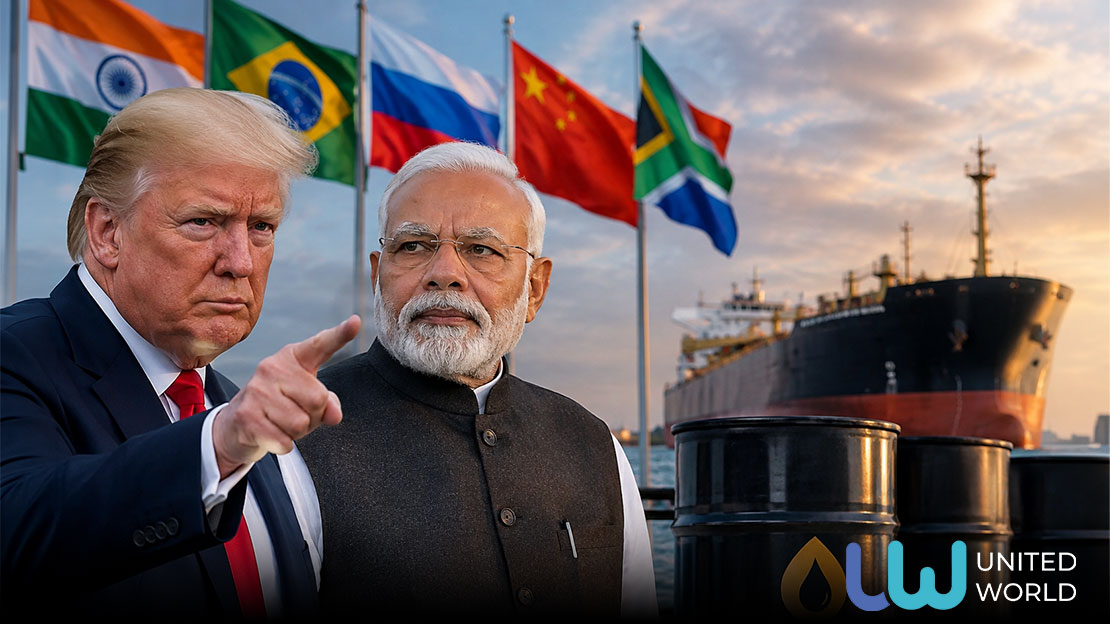
The BRICS summit in India concluded, with an emphasis on the world in transition to multipolarity. Washington responded, with US president Trump signing into law a bill that announces sanctions on those countries that import Russian oil.
The summit, held on September 12–13, brought together the expanded 11-member BRICS grouping at a moment of heightened geopolitical tensions, trade disputes and uncertainty over the future of the international order. The New Delhi Declaration called for a more representative international system, criticized unilateral coercive measures and supported greater cooperation among emerging economies.
For Indian journalists covering the summit, however, the most important story was not simply the formal declaration. It was the political choreography surrounding the meeting — particularly India’s efforts to maintain relationships with Russia and China while continuing to defend its own concept of strategic autonomy.
“The world has changed. Major economies have now emerged. And India, as a country, has been contributing, whether it’s a military, whether it’s economic scale. And so India has always believed that the voice of Global South must be represented and therefore we believe that there are reforms which are needed at the UN level and even other multilateral organizations as well”, told us Indian journalist Ishita Mitra.
This autonomy was on display regarding the war against Iran in West Asia, she added, out of own interests too. “We have seen tensions flare up recently between the US and Iran with the kind of exchange of attacks that happened. So, the Indian side still remains the same that we need both the warring sides to come on the table and to find a peaceful solution because a stable Middle East is also better for India. We have a lot of Diaspora that stays in that region, a lot of economic investments are also there. Specifically, if you talk about Iran, Chabahar port is there, so that has been stalled given the kind of tensions that have, you know, prevailed in that region. And also, with regards to energy supplies, India gets impacted directly with Strait of Hormuz getting blocked. So, India has been battling for the tensions to, of course, dial down, and for both the warring parties, whether it’s Iran, whether it’s the US to come back on the negotiating table and to find a solution.”
The energy supplies she mentions, should after the summit get under pressure. For Megha Sharma, journalist working for the Indian media Xnews, bringing together the opposing sides was the main success of the summit.
“I think the number one message that has come out from this summit is that India has been extremely successful in being able to build a consensus amongst all the BRICS member nations who have conflicting viewpoints. They are not necessarily on the same page. And this consensus has been brought about by way of a New Delhi declaration where there were hectic negotiations that happened. Because, as per sources, we were getting to know, media was getting to know that you know, right on the 11th night is when there were conversations and negotiations going on up until 4 am 5 am and then the next day, when the first session started, was when there was you know an absolute unity an absolute unity amongst nations, especially Iran and UAE and Saudi Arabia.”
The issue of mediating in the conflict was brought up by Chinese President Xi, who claimed that BRICS countries would have a bigger role in future. From an Indian perspective, this comes with a critique of Pakistan, one of the current mediators, as Sharma states.
“We all understand that under whose influence Pakistan functions. And when we talk about Well, the Trump administration and President Trump himself has been having a stronger relationship with the current administration in Pakistan as opposed to you know the previous one. So, that’s pretty clear when you talk about the cryptocurrency, the deal between Trump’s family and Pakistan. And I think when China comes into the picture, we see that China’s self interest, national interest are going to be hampered if there are going to be economic sanctions and secondary sanctions that are going to be. This is what America threatens countries. China imports 90 of its crude from Iran. So it’s like a massive impact on it. And it has vehemently rejected any sort of threats coming in from the Trump administration from America. So when it comes to China’s point of view, when it’s deciding to come and mediate, it brings about another perspective.”
Mitra adds that for the public opinion in India, sympathies are tending to on Iran’s side. “So we have seen time and again protests have also flared up in India across cities, talking about Iranian situation to and ever since the Supreme Leader that got killed. So as far as formal positions are concerned, we are very clear that we need this war to come to an end. Public opinion, of course, it is something that keeps on moving it from– also looking at Iran’s situation, because Iran has been in a vulnerable position with regards to US military mind. But despite that, despite the four-month war, Iran has stood out and has remained firm on its stand.”
She emphasizes the public picture that Indian Prime Minister Narendra Modi provided, walking hand in hand with Iranian President Masoud Pezeshkian. “So I think with the kind of visuals that came in yesterday of Prime Minister Modi walking hands in hands with Iranian President Masoud Pezeshkian, and that also sends a message that India will not, you know, India will stand against bullying and economic coercion, also, that’s been, you know, practiced by some Western countries. “
Then came Washington’s new sanctions law
That argument acquired a much more immediate meaning just days after the summit.
On September 18, U.S. President Donald Trump signed the Lindsey O. Graham Sanctioning Russia and Iran Act of 2026 into law. The legislation strengthens sanctions against Russia and gives the U.S. administration the authority to impose tariffs of up to 100 percent on goods from countries that meet specified criteria relating to purchases of Russian oil and gas.
India is directly exposed because it has been one of the largest purchasers of Russian crude since the war in Ukraine began. The law does not, however, automatically impose a 100 percent tariff on Indian goods. It establishes a mechanism under which the U.S. president can impose such measures, with significant discretion over implementation and possible waivers.
Professor Jagannath Panda, from the Indian Institute for policies on security and development, told me that India’s position will be clear. “I think many countries, including India, will defy that. So, it depends on what kind of demands we are talking about. But when it comes to 100 tariffs on Russian oil, I think I would not really be optimistic about that. I think India will continue its ties with Russia. Because Russia is a traditional partner of India. Russia supports India on a multilateral platform. Russia is a permanent member of the United Nations Security Council. India imports 30 to 35 percent to 40 percent of defense procurement from Russia. So, given all of these things, I think India will continue to purchase oil and gas from Russia. I don’t think India will succumb to the American pressure.”