


By Dr. Shoaib Khan, Founder and President, ALFAAZ Education and Cultural Society, Mumbai Visiting Faculty, Centre for Central Eurasian Studies, University of Mumbai
New Delhi’s relationship with Beijing has been more about temporary calm than a true shift in strategy over the past year. Still, India has started to agree on more measures that allow greater access to Chinese investments in manufacturing and climate technology, both of which are important for India’s growth. This should serve as a warning for European countries. If India can’t get the technology and money it needs from Europe, it might turn to China, even though it remains cautious about Beijing’s security intentions.
New Delhi still sees Beijing as a threat and is trying to build stronger security and economic ties with Brussels and Washington, even though President Trump’s policies have made things difficult. Modi has worked to prevent the BRICS group from becoming purely anti-Western, as that would not be in India’s best interests. Europeans also see India as an increasingly important partner, especially after the EU-India trade deal was signed earlier this year. This comes as Europeans are looking to spread out their political and economic connections amid tense relations between the US and Europe. However, India’s agreements with China, especially during the BRICS meetings, show that the EU can’t assume that closer ties will always be beneficial.
The Global South remains a vague concept
There’s not much clarity on what it really means to support its interests, other than calling for a fairer distribution of power in a world with multiple centers of influence. The BRICS summits need to move beyond empty promises and statements to real results if they’re to be seen as a serious player in global governance.
Russia, Saudi Arabia, South Africa, and the United Arab Emirates entered the summit with their differences clearly visible. Iran and the UAE are on opposite sides of the wider conflict, while Iran-backed Houthi forces have attacked Saudi Arabia. There’s also a deeper split between India and China over the unresolved border issue in the Himalayas and their competing roles in BRICS, with each country trying to be the leading voice for the Global South.
When it comes to trade, the discussions followed a similar pattern, showing serious worry about one-sided tariff actions and criticizing secondary sanctions without directly naming the United States. This was not surprising, given that several members are managing their own relationships with Washington. This restraint also helps those who don’t want BRICS to be seen as an anti-Western group.
BRICS has been viewed as an alternative to the Western-led global order when countries wanted to join, but it was seen as insignificant when the Iran war showed its limits. The conclusion of a successful summit with a joint statement, despite major differences among members, helps counter that negative view. However, a consensus that avoids tough issues leaves BRICS open to criticism of being just a place for talk without action.
Potential new members are more practical
Despite President Trump’s threats to impose tariffs on countries seen as aligning with BRICS, interest in joining has stayed steady. The attraction isn’t about ideological alignment but rather about accessing new markets, getting alternative funding, and having a seat where the rules could change in the future.
The ongoing conflicts in Ukraine and Iran, the competition between the US and China, and the second term of President Trump have made New Delhi’s long-standing approach of strategic balancing and middle power diplomacy look wise, if not more urgent, for modern international relations.
For Indian policymakers, the solution is to navigate through these geopolitical changes. India’s economic power and influence are not enough to ensure that BRICS+ won’t support Chinese positions. At the same time, the uncertainty in the US and the failure to reform international institutions mean that platforms like BRICS+ are needed to push for better representation on the global stage.
The summit ended with a consensus declaration, a more symbolic outcome that avoided controversial topics like a common currency and naming the US over its tariffs on BRICS+ members. Still, the declaration was an achievement in itself, especially given the differences between member states like Iran and the UAE, and China and India.
This outcome reflects the broader geopolitical situation. The long-running war between Iran and the US, along with its economic and political consequences, are additional factors influencing the decisions of member states in the short term. Compared to today, BRICS+ came into existence in a very different geopolitical situation after the Cold War ended. At that time, China, India, and Russia used the group to counterbalance the influence of the United States. The main goal of their collaboration was to change international institutions so that developing countries had more say. In the past ten years, BRICS+ has experienced changes in its role and how it sees itself as a group. These changes are linked to two main factors.
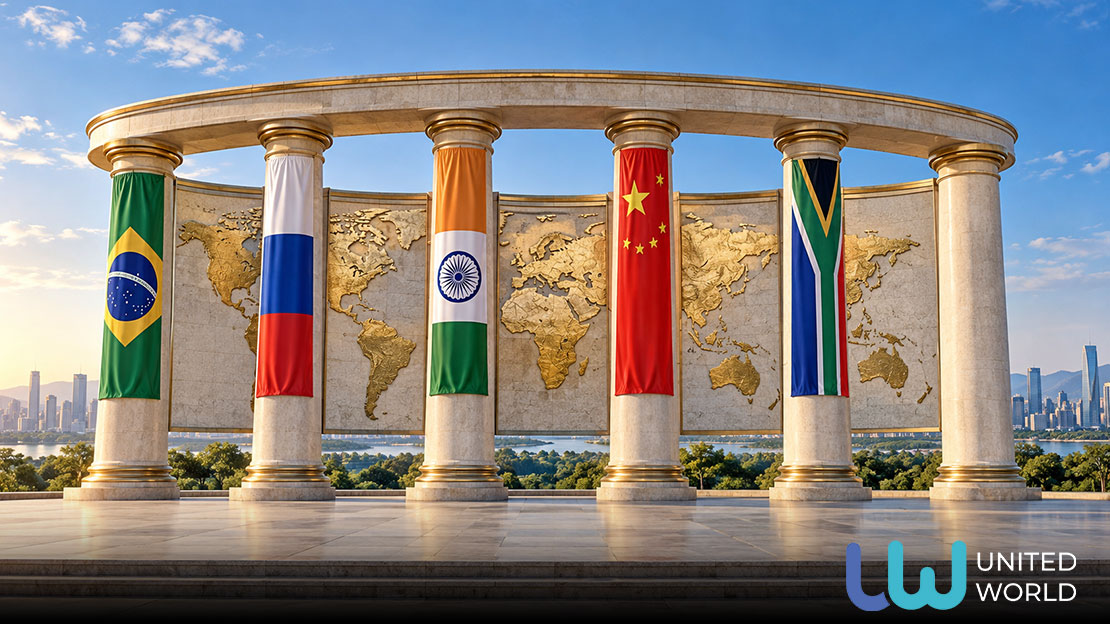
BRICS was originally created as a platform for discussing major topics that affect the world stage. In the beginning, it focused on forming shared views on key political and economic issues. The group aimed to support a more fair, just, and balanced international system. It also highlighted the importance of sustainable economic and social growth, including social inclusion and shared prosperity in developing countries. These key points have helped build stronger and more comprehensive cooperation among its members.
Over the years, BRICS cooperation has grown to include important global issues and areas where countries work together. It covers topics like labor and jobs, communication technology, international finance, and the state of the global economy. BRICS supports the idea of having more voice and fairness in international organizations such as the WTO and the global financial system. These actions are meant to make global decision-making more inclusive, efficient, and better suited to today’s challenges.
BRICS has emerged as a key platform for coordinating economic policy among major emerging economies. It serves as the principal forum where these nations shape a common position on global governance. Through sustained dialogue, it has become a channel for advancing the interests of the Global South within multilateral institutions. Its agenda spans development, finance, technology, trade and people-to-people exchanges.
BRICS has emerged as a key platform for coordinating economic policy among major emerging economies. It serves as the principal forum where these nations shape a common position on global governance. Through sustained dialogue, it has become a channel for advancing the interests of the Global South within multilateral institutions. Its agenda spans development, finance, technology, trade and people-to-people exchanges. The grouping reflects the growing economic weight and aspirations of emerging economies globally. It provides members with a platform to share experiences and address common challenges.