


By Orçun Göktürk, from Beijing / China
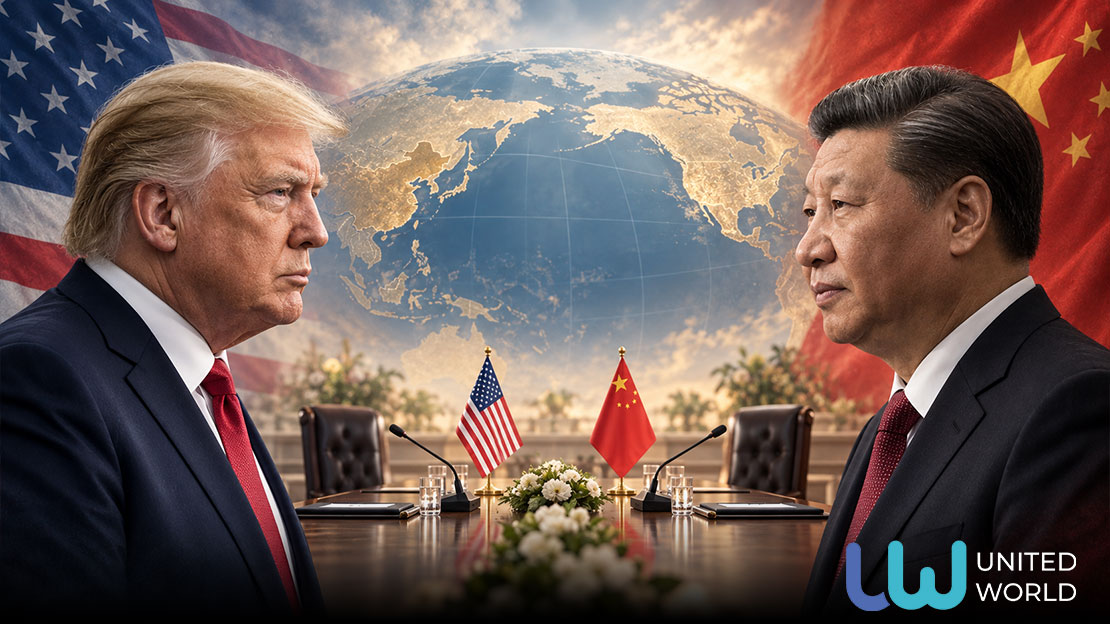
Chinese President Xi Jinping and US President Donald Trump have met for the third time in a year. The decision to take a “short pause” in the trade war, which began on the sidelines of the APEC summit in Busan, South Korea, last October, was reinforced by Trump’s visit to Beijing in May. Following the meeting in Washington, the world’s two largest economies once again agreed to “pause the conflict,” particularly on trade and a number of other issues.
As has been widely emphasized, Trump became the first US president in nearly half a century to go to the airport to receive a foreign head of state. Xi had been given an extraordinary welcome during Trump’s visit to Beijing in May. Perhaps influenced by that hospitality, the same courtesy was extended to Xi this time.
Trump’s Jokes, Xi’s Laughter
Xi Jinping is known as a “poker face,” a leader who rarely shows his emotions. Yet we saw him laugh several times during the same occasion for perhaps the first time. While touring the area of the White House where portraits of US presidents are displayed, Trump pointed to a photograph of Biden signing a document and joked, “This is Biden. Very lazy. All he did was sign documents,” prompting one of Xi’s rarely seen smiles.
Trump continued his jokes like a showman. This time, pointing to a photograph of himself with Xi, he said, “I don’t even know who that guy next to me is,” and Xi once again burst into laughter.
‘Cooperation Within Conflict’
But do the laughter and jokes really indicate friendly relations? Developments since June suggest otherwise. Let us recall the latest developments.
A few weeks ago, Washington announced new sanctions against 60 individuals, companies and vessels linked to trade with Iran. Among those targeted were entities based in mainland China and Hong Kong.
In June, the Pentagon added dozens of major companies, including Alibaba, Baidu and BYD, to its list of “Chinese military companies.” This designation could restrict these companies’ access to US capital and markets. In July, Washington announced that it would impose tariffs of 10 to 12.5 percent on goods from 60 economies, including China, following a Section 301 investigation into forced labor.
This was followed by a ban on imports of Chinese-made robots and power inverters, as well as a 15 percent tariff on polysilicon. The broader message conveyed by all these measures is clear: Washington is increasing pressure on multiple fronts, while Iran continues to serve as an instrument of pressure against China.
How Is China Responding to Washington’s Attacks?
Beijing’s response to this pressure appears deliberate and measured. For China, the days of responding to US pressure with broad-based tariff retaliation seem to be over. Instead, Beijing appears willing to hold back when the costs of reciprocal escalation outweigh the benefits, while choosing to respond in a targeted manner when its core interests are threatened.
When the US imposed a 12.5 percent forced-labor tariff, according to figures reported in the press, below the 20 percent ceiling it had accepted, Beijing refrained from retaliating. But when structural exclusions crossed a certain threshold, such as when the US added 43 Chinese companies to its import blacklist over allegations of forced labor, China responded with targeted export controls and a trade investigation on national security grounds. Beijing now appears to be speaking Washington’s language fluently.
The Iran Issue
But the calculations are sharper when it comes to Iran. China strongly opposes any attempt to dictate which countries it can do business with. If the US imposes secondary sanctions, Beijing is signaling that it will retaliate forcefully.
Beyond Iran, there are two other flashpoints that will determine whether this controlled tension remains within its current limits or evolves into a systemic rupture.
The first is the US investigation into Chinese overcapacity. The second is the potential use of China’s Permanent Normal Trade Relations (PNTR) status as a weapon.
The bipartisan initiative in Congress to subject PNTR to annual review is not merely rhetorical. A research report prepared by the US International Trade Commission has transformed what had been a matter of political debate into a formal, data-backed analysis.
Ending PNTR would subject Chinese goods to new tariff rates and raise the average US tariff on Chinese imports to between 35 and 45 percent. The US kept all of these measures on the table as leverage in the negotiations ahead of Xi’s visit.
The combination of high US tariffs and a potentially harsh Chinese response would constitute the deepest rupture in bilateral trade since China joined the World Trade Organization (WTO) in 2001.
The positive atmosphere that emerged following Trump’s visit to Beijing had given way to renewed tensions in bilateral relations. Washington continues to take steps to contain China’s rise. This was followed by the supposedly positive atmosphere created by Xi’s visit to the United States.
Yet Beijing understands that the era of strategic economic cooperation with the United States has come to an end. It has been replaced by an era of competitive coexistence.