


By Yiğit Saner
The conflict between Yemen’s Ansarullah Movement (Houthis) and the Saudi-led Coalition remains high on the international agenda. Developments unfolding in parallel with the Iran War began this summer when Saudi Arabia struck Sana’a Airport. The rapidly escalating tensions peaked when Ansarullah imposed a blockade on Riyadh in the Red Sea. Reciprocal attacks on strategic facilities, along with clashes on the ground between Ansarullah and the militias of the Saudi-backed Presidential Leadership Council (PLC), have brought back memories of Yemen’s civil war.
In September, Ansarullah launched a lightning offensive, taking control of Yemen’s entire western coastline and establishing full control over the strategic Bab al-Mandab Strait and its coastal islands.
As Saudi oil refineries and pipelines come under missile and drone attacks, Riyadh is seeking support from country to country, including Türkiye. Ankara is closely following developments because of the Mecca Defense Agreement it signed with Pakistan and Saudi Arabia this summer. Some US lawmakers, including Joe Wilson, are calling on Türkiye to intervene against Ansarullah. However, the Mecca Agreement has not yet been submitted to the Turkish Grand National Assembly for ratification, and its details have not been made public.
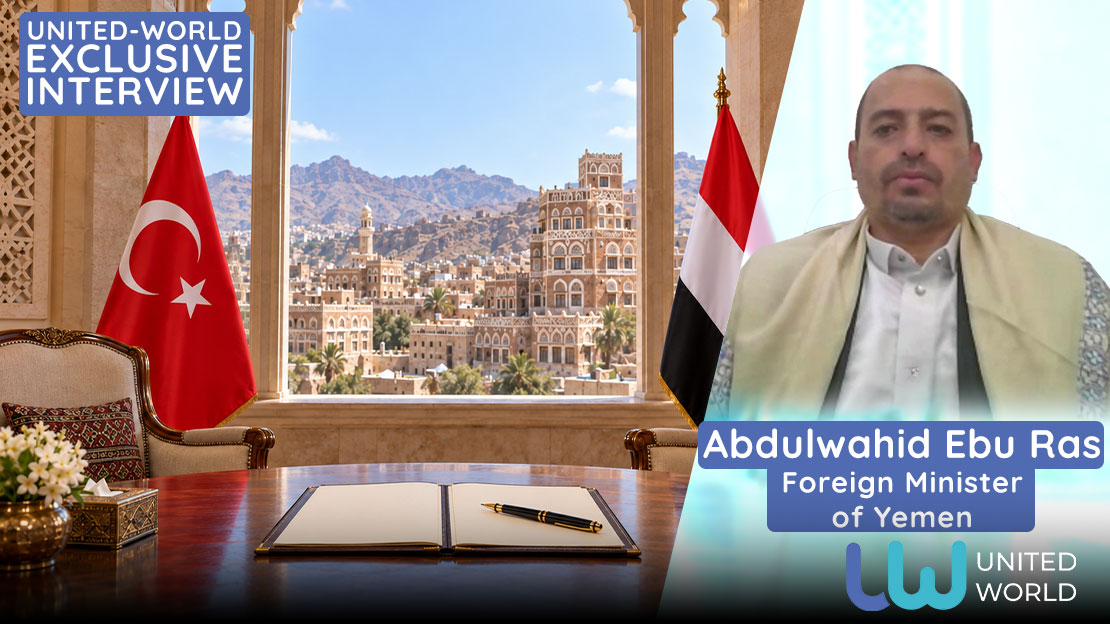
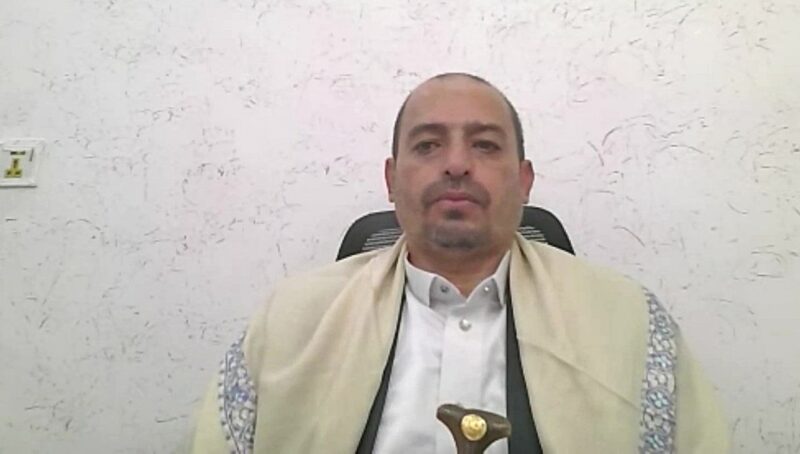
Amid this complex situation, we spoke with Abdulwahid Abu Ras, Foreign Minister of the Sana’a Government affiliated with the Ansarullah Movement. Sending warm and constructive messages to Türkiye and the Turkish people, Abu Ras stressed that they do not want to widen the war, but are determined to defend Yemen’s rights and are prepared to resist any aggression in response to developments in the region.
Possibility of a Ceasefire
Reports have emerged that Saudi Arabia through Oman has proposed a ceasefire to the Sana’a government. What are your main conditions for a ceasefire?
“First of all, we welcome you all, and we are truly happy to make our voice heard primarily to the brotherly Turkish people. We are keen for the picture to be clear, especially since there is a smear media campaign launched against the Yemeni people, attempting to create a rift between the Yemeni people and the Turkish people—that is first.
“Second, the issue right now is not the ceasefire; the issue is the ongoing blockade. We have repeatedly stated to the Saudi side that we are ready to lift the blockade, stop the escalation, and cease fire in exchange for lifting the blockade—there is a clear and explicit demand. The Omani side is aware of this. The Saudi side continues to want us to remain under a continuous blockade while calling for de-escalation. De-escalation requires ending the blockade; that is the first step toward moving forward regarding de-escalation and a ceasefire.”
The Issue of Foreign Forces Deployed In Saudi Arabia
It has been reported that Saudi Arabia is seeking air defense systems and military support from various countries. How would the Sana’a government view the deployment of foreign military forces on Saudi territory? Would such a deployment be considered a direct military intervention against Yemen?
“Yes. When the procurement of weapons and the like occurs in the context of aggression against Yemen and during the same timeframe, we consider it part of the hostile actions targeting Yemen. However, if it occurs in a normal context, it is the right of any sovereign state to possess weapons, build a military arsenal, and acquire air defense systems under normal circumstances.
“However, in the context of ongoing aggression and hostility toward Yemen, and the continuous blockade against the Yemeni people—with nearly 800 airstrikes within roughly two weeks using F-15s and Typhoons deployed by the Saudi regime to target the Yemeni people—any military arming truly falls under this hostile context.
‘They Have Major Territorial Ambitions’
“Nevertheless, the Yemeni people are accustomed to this Saudi regime, which since the 1930s has been actively targeting Yemen, treating it as its back garden. It tore the country’s social fabric, created militias inside the country, bought loyalties, confiscated political decision-making, and violated the nation’s overall sovereignty.
“In general, we view any Saudi military posture during this period as targeting Yemen. Yet, the Yemeni people are fully present and prepared to confront any aggression in every sense of the word. Confronting these attacks does not stem from a desire for war. No, the Yemeni people love peace and harmony and desire to live like other nations in stability and good economic conditions, but war is forced upon them. The Saudi regime seeks dominance and control and holds major territorial ambitions, such as controlling specific provinces like Hadramout and Al-Mahrah to gain direct access to the Arabian Sea.
“This is the true picture regarding the Saudi regime’s view of Yemen and the military equipment and armaments arriving in this context.”
Israeli Activities On The Other Side Of Bab Al-Mandeb
Israel’s military presence in the Bab-al-Mandeb line through its Somaliland move is a clear threat to the region. How do you evaluate the impacts of Ansar Allah’s direct struggle in this line on both its own regional strategy and the security of the other regional countries targeted by Israel?
“We view the Israeli enemy entity as a real and actual threat to the entire region. There is the so-called ‘Greater Israel’ project and the ‘New Middle East’ project, all of which prepare for a more active Israeli presence—it is already active, but seeking total control over the situation in the region. Through this, it aims to expand into many regional countries, reaching Egypt, parts of Saudi Arabia, and several other states.
“Recently, however, Israeli expansion toward the Federal Republic of Somalia has become evident. It primarily targets Somalia to fragment the Somali state, secondarily targets the countries of the Horn of Africa, and thirdly targets Yemen specifically due to its supportive stance toward Gaza, while threatening regional states as a whole.
‘We Are Determined To Target The Israeli Presence’
“We view this presence as a direct threat to us. When this project materialized on the ground, we announced that we would not stand idly by regarding this Israeli activity in Somalia and that we would target this activity directly through military means, as we consider it a direct threat to us and to our national security.
“Only a few dozen nautical miles separate us from Somalia; therefore, any Israeli presence constitutes a direct threat. We explicitly call on the countries of the region to cooperate and stand together to stop this criminal entity from attempting to expand.
“We know that the vast majority of Islamic countries do not desire or accept this expansion, but the current state of fragmentation and internal conflicts among these nations supports and contributes to the Israeli enemy’s expansion.
“Overall, this presence poses a threat to all of us and to the countries near Somalia primarily. We are determined to target this presence, prevent it, and coordinate with others. We hope to coordinate even with the Turkish side to stop the Israeli enemy from expanding in the region’s countries.”
‘The Blockade Is Only Against the Saudis’
The naval blockade you are currently imposing in the Red Sea applies only to Saudi Arabia. But would the vessels of countries providing military support or weapons to Riyadh also be included in the future in the blockade? Thank you.
“First, we do not wish to expand the circle of conflict; we seek to end this problem. Even our move toward a blockade came in the context of ending the problem, not expanding the conflict. We have a clear, just, and legitimate demand: stopping the blockade imposed by the Saudi regime.
“We truly hope that other countries do not head in this direction, because we do not target others and have no intention of targeting others, whether in the Red Sea, the Bab-el-Mandeb Strait, or elsewhere. Our targeting is strictly directed at the Saudi side and Saudi vessels under this specific demand.”
“It truly pained us to move toward confronting a regional, Islamic state, but we were forced into it; we entered this conflict reluctantly. We have no orientation, intention, or hidden motive to target any ships in the Red Sea or the Bab-el-Mandeb Strait. We consider this waterway an international maritime passage, and we are keen for it to remain secure and for trade to flow smoothly. We have no intentions in that direction.”
’80 Percent Of The Population Lives In Sana’a Government Areas’
What’s the current situation on the ground across Yemen and the Bab-el-Mandeb Strait? At what stage does the Ansar Allah movement stand regarding national reunification? And in this perspective, how would you evaluate the prospect of Türkiye acting as a diplomatic mediator between Yemen and Saudi Arabia?
“The current situation in the country is unstable due to foreign interventions. Ansar Allah provided a model that stands as evidence of their commitment to reaching an understanding with other political factions, components, and forces inside the country. Following the success of the September 21 revolution in 2014, Ansar Allah presented a positive example by signing the Peace and National Partnership Agreement under UN auspices and in the presence of the Special Envoy of the UN Secretary-General, Mr. Jamal Benomar, at that time. That agreement brought together all political forces, including elements of the former regime; the revolution did not aim to exclude even the previous regime. Ansar Allah worked to establish a common ground for everyone to move forward. However, foreign intervention is what creates instability.
“Currently, Ansar Allah has a strong presence in every sense of the word. This is not due to military power alone, but to popular support, public presence, and a broad popular base. Approximately 80% of the Yemeni population resides in areas governed by the Sana’a government, sharing these same common concerns. Ansar Allah is part of these components, and the current government in Sana’a is an integral part of the Yemeni people across all spectrums and regions, north and south.
‘We Are Waiting For The Turkish Delegation’
“Regarding the answer about the Turkish role: yes, we welcome a Turkish role in every sense of the word. The Saudi regime wants the Yemeni people to see Turkish fighter jets in Yemen’s skies, which is something we do not favor. We would like to see a civilian aircraft carrying a political delegation arriving in Sana’a to sit with the Sana’a government, play a mediation role, and contribute to resolving the current crisis—we welcome this aspect.
“We seek neutral parties because many current parties are not neutral; they are aligned with one side or another. However, we welcome a Turkish presence, even regarding the humanitarian aspect. The Yemeni people are living through suffering, misery, and deprivation due to the continuous blockade and the constant targeting of infrastructure. We can say that the Saudi regime, along with its American, British, and Israeli partners, has destroyed nearly 90% of the country’s infrastructure.
We welcome a presence from the Turkish people and the Turkish side in humanitarian work, political mediation, and similar efforts.
A Regional Alliance Including Yemen
The war with Iran has undermined the US security umbrella in the region while the resulting uncertainties have led regional countries to seek new security arrangements and alliances. What would the Sanaa government expect from a regional defense alliance?
“We call on all countries in the region to build a joint regional security framework. This system should include all active and influential regional states, led by Türkiye, Iran, Pakistan, and Egypt, and even Saudi Arabia can play a positive role in this regard, away from internal conflicts targeting the nation from within.
“Therefore, we support establishing this alliance and building a regional security system where regional states take responsibility for protecting themselves using their own capabilities, and we possess all the necessary elements. Yemen will be an active, positive, influential, and significant contributor in this direction, and we are fully prepared to do everything in our power to pursue this step to the very end.
“We know there are many gaps between countries in the region, but we must bridge them. The US presence in our region negatively contributes to creating these gaps, broadening existing issues, and perpetuating conflict. Through you and your media outlets, we call on everyone, foremost Türkiye, to take real steps.
‘Everyone Except One Country’
“When we saw an alliance like the Mecca Alliance, for instance, we aspired for such an alliance to expand to include everyone, with its primary objective launching from Mecca aimed at Jerusalem and Al-Aqsa Mosque before targeting regional states. We are fully ready, we welcome this orientation, and we will offer support and contribute positively.
“Of course, as an exception—since we didn’t explicitly mention it—the Israeli enemy entity is excluded from any cooperation within the region’s countries. We consider this entity completely foreign to our region, and Palestine must return to the Palestinian people—all of Palestine, from the river to the sea. When we speak of a regional security system, it excludes the Israeli enemy entity.”
The Mecca Smear
An intense propaganda campaign was carried out claiming that Yemeni missiles targeted Mecca. As the Minister of Foreign Affairs, do you see this as a perception operation? What can you say about these information efforts carried out in the field and in the media?
“The Saudi regime exploits the Two Holy Mosques and Holy Mecca to target its opponents, turning them into its own media pulpit. One can look back at the policies of the Saudi regime throughout past periods.
“Regarding the targeting allegation, as the leader Sayyid Abdul-Malik Badruldeen al-Houthi (may God protect him) stated, this is literally the lie of the century. The Yemeni people, who fought the struggle alongside the Palestinian people in defense of the holy sites, in defense of Al-Aqsa Mosque, and in defense of the Palestinian people—giving for the sake of this cause a martyr Prime Minister, half of the Cabinet members as martyrs, the Chief of the General Staff, and many sons of the Yemeni people, along with targets on infrastructure and civilian objects—how could the Yemeni people ever intentionally target Holy Mecca, the qibla of Muslims?!”
‘The Saudis Have No Right To Speak About The Holy Sites’
“The Yemeni people hold Islamic holy sites in the highest esteem and respect, and are ready to sacrifice for them. The Saudi regime is fundamentally in no position to speak on behalf of Holy Mecca. The Saudi regime stands with the enemies of the nation against righteous causes, foremost among them the Palestinian cause.”
“What is being said—these slanderous fabrications against us—is part of a systematic and continuous targeting campaign by the Saudi regime, and this is not the first time. The Saudi regime fabricated this exact lie in the past, but the Muslim nations are well aware of this. They understand the policies driving the Saudi regime and how it tries to present a picture completely contrary to reality. What the Saudi regime is practicing is pure falsehood and untrue. If the Saudi regime truly cared about Islamic holy sites, where is its stance in defending Jerusalem, Al-Aqsa Mosque, and Palestine in general?”
Why Did Yemen Enter The War In Gaza?
Turkish audience, Turkish citizens heard about Ansar Allah with October 7th. The international community has closely witnessed the resolute struggle of the Ansar Allah movement against the United States. What would you like to convey to the Turkish nation regarding the anti-imperialist struggle waged by the Ansar Allah movement and the Yemeni people?
“Everyone has seen, observed, and heard the scale of the crimes and genocide to which the Palestinian people have been subjected, and the level of suffering reached by the Palestinian people—which continues to this day, especially in Gaza. Likewise, the entire world has witnessed the absolute level of human abdication of responsibility. Carrying out our duty toward these crimes and stopping the Israeli enemy from its ongoing atrocities required the Yemeni people to enter this battle in support and solidarity with the Palestinian people. It did not come as a luxury or a tactical political stance, but out of human, moral, and religious responsibility.
“At the same time, the Yemeni people were still living through suffering, misery, and deprivation due to the continuous blockade, the aggression that lasted for many years, and the deteriorating economic situation resulting from the wrong policies of the previous regime, as well as the aggression that started in 2015 and continues to this day.
‘The Islamic Ummah Is Not Exempt From Its Responsibility’
“When the Yemeni people fought this battle for these values—for human, moral, and religious values—this is what the Yemeni people want everyone to know: that the Yemeni stance stems from humanitarian premises. We wished for everyone to be a support, for others to also take a principled stance, and at the bare minimum, for there to be movement to pressure governments to do the minimum to stop these crimes.
“The Yemeni people are continuing in this stance until the very end, and we hope that everyone extends a helping hand, joining forces and cooperating to stop these ongoing crimes. We are fighting this battle on behalf of the nation (Ummah), but we know with absolute certainty that the nation is not exempt either; everyone remains responsible and obligated to do what they can to stop these crimes. These are the principles and premises upon which the Yemeni people moved.”
The Threats Targeting The Turkish And Yemeni Peoples Are Common
What is your direct message to the Turkish nation?
“The Yemeni people hold warm feelings toward the Turkish people and have complete respect and appreciation for them. We truly hope for continuous communication channels at both the popular and official levels. We hope to bridge the existing gap between the two peoples.
“The threats targeting us target everyone—they target both the Yemeni people and the Turkish people. We share many common denominators and mutual interests that we can work on. We truly wish to build mutual respect based on these values, and our message comes in this context.
‘We Expect Effective Mediation From Türkiye’
“Furthermore, we would like to see positive stances, effective mediation, and a positive Turkish role regarding the ongoing problem between Yemen and Saudi Arabia, as well as internal issues. We welcome a Turkish role in every sense of the word.
“As we said, our outlook is positive, upon which we build these relations. Yesterday, we followed President Erdoğan’s speech at the UN General Assembly, and his words were clear regarding the Israeli enemy entity. We share the same common concern, and we hope to translate these words into practical, effective efforts and joint activities to confront the Israeli enemy entity, which targets us all and targets the Palestinian people. This is our message and these are our principles.
“As a final comment, if I may: We hope the Turkish side does not get drawn along by the Saudi regime. The Saudi regime is trying to widen the gap and create conflict among the nation’s people. We hope the Turkish side does not get drawn into this devilish step, understanding that any targeting of the Yemeni people ultimately targets the Turkish people as well. We see recent Saudi activity as harmful to tearing apart the nation’s internal fabric. We hope our voice and message, representing the Yemeni people as a whole, are conveyed. We hope Türkiye plays a positive, rather than negative, role in Yemen.”
Thank you so much, Your Excellency.
“We are truly happy with this meeting and glad to have communication. Events in the region are hot in every sense of the word, and developments are significant. We observe ongoing developments, and the region is heading toward further escalation. We wish to stay in touch with you and the Turkish people to convey our voice, clarify the picture, answer questions, and prevent future issues, as some seek to create a collision between the Yemeni and Turkish peoples.
“We hold all appreciation and respect for the Turkish people—a courageous, free, noble, and dignified Muslim nation. We wish them success in bearing their major responsibilities at this stage, amid the decline of roles played by many regional states. We hope for a strong, active, and influential presence from the Turkish side and people. Let us maintain communication, and we thank you very much.”