


By Hakan Burak Özyer
President Recep Tayyip Erdoğan took part in the 26th summit of the Shanghai Cooperation Organization (SCO), held in Bishkek on 31 August – 1 September 2026.
The summit took place against a backdrop of persisting instability in the Middle East, fueled by the ongoing Iran–United States conflict and the destructive policies of Israel and Greece in the Eastern Mediterranean.
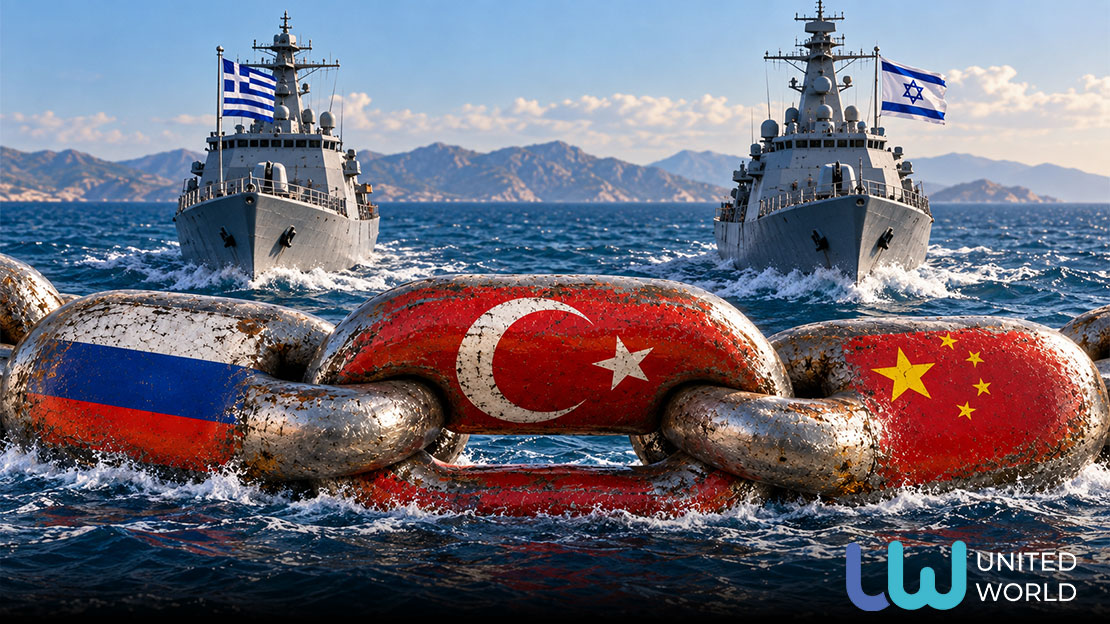
It is pertinent to recall the initiative of Devlet Bahçeli, who previously advanced the idea of a Türkiye–Russia–China (TRÇ) alliance. Ankara’s engagement with the SCO countries fits squarely within this ideological framework and reinforces Türkiye’s standing as a bridge between East and West.
Furthermore, the development of the TRÇ alliance concept serves to strengthen Türkiye’s regional position and to alleviate pressure exerted by Western powers.
President Erdoğan’s activities at the summit
He held several bilateral meetings with other heads of state, including Vladimir Putin, Ilham Aliyev, Sadır Japarov and Alexander Lukashenko.
In his remarks, Recep Tayyip Erdoğan expressed his intention to continue strengthening relations with the SCO and emphasized the substantial mutual benefit derived from cooperation, both for Türkiye and for the organization as a whole.
When asked about his conversation with President Putin, Recep Tayyip Erdoğan stated that the discussion had been highly productive and conducted in a very cordial atmosphere. He further noted that Türkiye-Russia relations are truly at a much more advanced level today than at any other time in the past.
Türkiye sought to be drawn into conflict
Recent years have exhibited a clear trend towards an increasing number of conflicts encircling Türkiye. In the past few months, however, there has been a tangible escalation in military threats directly along Türkiye’s borders. This is primarily attributable to the expansionist posture adopted by Israel in Syria and by Greece in the Aegean Sea. Secondarily, it is connected to Ukrainian attacks in the Black Sea targeting Turkish vessels.
In order to identify the immediate source of these threats, one must pose the following questions: who stands behind these countries? Who supplies them with armaments? Who directs their use of such weaponry? All such questions point unequivocally towards the United States.
For example, Israel recently conducted a strike in proximity to Türkiye’s border, calculating that it would inflict casualties on Turkish personnel whom Israel assumed were present at the facility at the moment of the attack. Washington confined itself to issuing appeals for restraint.
It should always be taken into account that the United States permits Israel considerably greater leeway than it grants any of its other allies – to the extent that it may even countenance a strike against another ally, as occurred with Qatar in 2025.
At the same time, Israel explicitly designates Türkiye as its next target after Iran. What is that if not direct threats to our security, supported by the United States?
The TRÇ alliance returns to the fore
Following the conclusion of the SCO summit, the newspaper Türkgün published an article bearing the headline “TRÇ formülü, yeni dengelerin anahtarı” (“The TRÇ formula, the key to new balances”). Türkiye’s participation in such an event once again illustrates the relevance of this formula.
The leader of the Milliyetçi Hareket Partisi, Devlet Bahçeli, is the closest political ally of President Recep Tayyip Erdoğan. This suggests that his views largely reflect the position of the Presidency. Mr. Bahçeli maintains that the creation of a TRÇ alliance, composed of Türkiye, Russia and China, constitutes “the most suitable option for Türkiye in terms of reasonableness, diplomacy, political spirit, geographical conditions and the strategic environment of the new century”.
The ideology underlying the TRÇ alliance reflects Türkiye’s growing role on the international stage and demonstrates the multidimensional character of its foreign policy. It is not necessary for Türkiye to justify its policies before Western countries. A foreign policy that follows exclusively national interests represents the only course for Türkiye and its citizens.