


By Mohammad Reza Moradi, General Director of Mehr News Agency’s Foreign Languages and International News Department, from Tehran / Iran
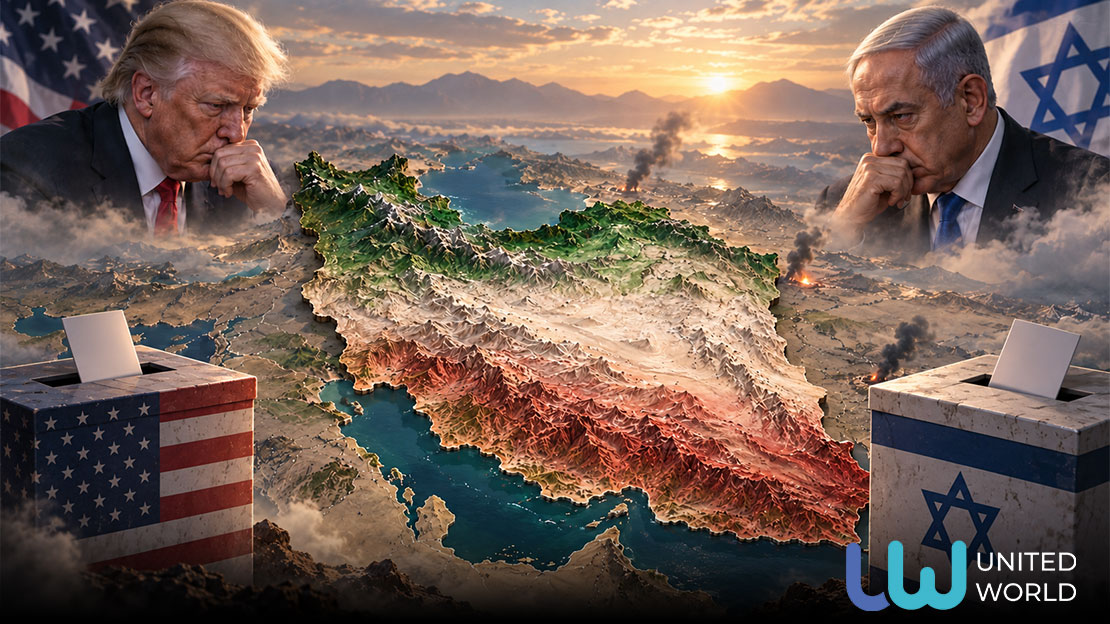
The war involving Iran has entered a sensitive phase as its military developments coincide with two important electoral calendars in Israel and the United States. From this perspective, the war is no longer merely a military confrontation or a foreign policy issue; it has also become a variable in the political calculations of both Israeli and American leaders. Benjamin Netanyahu and Donald Trump are both approaching electoral tests, but their political needs from the war are not the same. Netanyahu needs, above all, a clear and tangible achievement that he can present to Israeli voters, while Trump is seeking to manage the war, contain its costs, and prevent the conflict with Iran from becoming an electoral liability for Republicans.
Netanyahu: A War That Must Be Turned Into an Electoral Achievement
To understand Netanyahu’s conduct, his electoral position must be taken into account.
Recent opinion polls indicate that the political contest in Israel remains extremely close and volatile, with neither of the two main camps having a clear path to forming a government. Across five polls conducted after the electoral lists were finalized, the Yashar party, led by Gadi Eisenkot, emerged as the largest party in most surveys. The average of these polls puts Yashar at around 23.6 seats and Netanyahu’s Likud at approximately 21.8 seats.
At the same time, Likud has ranked first in some polls, underscoring how open the race remains.
The more important issue, however, is not the number of seats won by the two parties, but the balance between the blocs.
The average of the five most recent polls puts Netanyahu’s bloc at approximately 53.6 seats and the opposing bloc at 53.4 seats. In other words, neither side currently has the 61 seats needed for a parliamentary majority.
In a recent poll, Likud stood at 19 seats while Yashar had 25, with the opposition bloc reaching a combined 58 seats.
This situation gives the outcome of the Iran war additional political significance for Netanyahu. He is not simply looking to portray the war as “manageable”; he needs to turn its outcome into a security achievement.
Such an achievement could take the form of reducing Iran’s strategic capabilities, altering the regional balance of deterrence, imposing long-term constraints on Tehran, or reaching an agreement that Israel can present as the result of military pressure.
For Netanyahu, the political value of the war ultimately depends to a significant extent on whether he can establish a direct link between the actions of his government and greater security for the Israeli public.
If the war ends without a clear result, his opponents will have an opportunity to highlight its human, economic and political costs and ask a straightforward question: What was the ultimate achievement of the conflict?
Trump: A War That Must Be Controlled
Trump’s calculations are different. He is not approaching a presidential election; rather, the United States is heading toward the midterm congressional elections. For the president, the central issue is therefore preserving the Republican Party’s position in Congress and preventing foreign policy from becoming a factor that weakens the governing party.
Recent data on Trump’s political standing are not particularly favorable. In a recent Financial Times/FactSet poll, approval of his performance fell to 33 percent, the lowest figure recorded in that series since measurements began in May. An NBC News poll put Trump’s approval rating at 36 percent, with 64 percent disapproving.
In the same survey, only 31 percent approved of Trump’s handling of the Iran war, while 69 percent disapproved.
These figures do not necessarily mean that Republicans will lose the November elections. They do, however, indicate that the Iran war has become an electoral issue at a time when Trump’s overall political standing is already under pressure.
At the same time, Democrats are in a relatively favorable position in the broader competition for the House of Representatives, with recent electoral data pointing to the possibility of significant gains.
From this perspective, Trump needs a war that he can control and bring to a defined conclusion.
A prolonged conflict, rising energy prices, higher U.S. military costs, or deeper direct involvement by American forces in a war of attrition could make the electoral calculations considerably more difficult for Republicans.
Trump’s recent comments about the war’s end are significant from this perspective. He has said that the Iran war will end after the midterm elections—an assertion that, at the very least, indicates how explicitly the American political calendar has entered calculations over the war’s timing.
Two Different Political Needs in the Same War
Thus, although Trump and Netanyahu share strategic objectives regarding Iran, their electoral needs are not identical.
How Could Elections Change the Course of the War?
The relationship between elections and war is not one-way.
A war can influence an election, but an election can also alter the course of a war.
In Israel, if Netanyahu succeeds in establishing the Iran war as a security success, his position vis-à-vis domestic rivals could strengthen. But if the war drags on and ends without a clear outcome, it could become part of the case his opponents make against him rather than a source of political capital.
The same applies in the United States.
If Trump can manage the war at limited cost and deliver a clear outcome, he can present it as evidence of strength and effectiveness in foreign policy.
But if the conflict leads to higher energy prices, greater economic pressure, or additional casualties, his opponents could portray it as an example of the costs imposed by Republican foreign policy.
This is particularly important because recent data indicate that the American public is not highly satisfied with the way the war is being managed.
For Trump, therefore, the issue is not simply achieving a military outcome; it is also how that outcome is perceived and framed in American political discourse.
The Possibility of a Clash Between Washington’s and Tel Aviv’s Electoral Needs
During the early stages of a war, convergence in military objectives can obscure political differences. But as the conflict approaches decisions over whether and how to end it, differences in the interests of the two sides can become increasingly visible.
Netanyahu may need an additional operation, agreement, or concession that he can use politically in the election.
Trump, by contrast, may be looking for a point at which he can halt the war and present its outcome to American voters as sufficient.
For this reason, one of the key variables in the future of the Iran war could be the degree of coordination between Washington and Tel Aviv over the “end point” of the conflict.
If both sides conclude that a specific achievement is sufficient to end the war, the electoral calendar could become a factor accelerating the conflict’s conclusion.
But if Netanyahu seeks an achievement that goes beyond what Trump considers sufficient for the American public, the electoral calendar could instead contribute to diverging calculations between the two allies.
War: Electoral Opportunity or Political Liability?
Ultimately, the war can be both an opportunity and a threat for both leaders.
For Netanyahu, a successful military outcome could ease some of the domestic political pressure and reinforce his argument for a hard-line security policy.
For Trump, a successful conclusion could strengthen his image as a president who is both powerful and pragmatic.
But there is a point at which this relationship can reverse.
If the war drags on and its achievements remain ambiguous to the public, the same war that was supposed to generate political capital could become an electoral liability.
For Trump, this risk is particularly significant because of the economic costs and American public opinion.
For Netanyahu, the danger lies in questions over the war’s security outcome and his ability to form the next government.
Conclusion
The Iran war cannot be analyzed solely through the military balance among the parties involved.
Under current circumstances, the political variable is becoming increasingly important alongside the military one.
Trump and Netanyahu are both approaching elections, but they are not in the same electoral position and do not require the same outcome from the war.
Netanyahu faces a close contest to retain power and therefore has a strong need for a tangible security achievement that he can present to voters.
Trump faces the midterm elections amid declining approval ratings and must, above all, prevent the Iran war from becoming a political and economic liability for Republicans.
From this perspective, it can be argued that Netanyahu needs a victory he can sell, while Trump needs an ending he can manage.
This difference could become increasingly important as the war moves from the logic of military operations toward negotiations and decisions over the terms of its conclusion.
The Israeli and American elections, therefore, are not simply events taking place on the sidelines of the Iran war. They are part of the decision-making environment shaping the conflict’s future.
If the military outcome can simultaneously meet the political needs of both leaders, the elections could become a catalyst for ending the war.
But if the achievement Netanyahu needs differs from the endpoint Trump considers appropriate for the United States, the electoral calendar could become one of the factors complicating the final stage of the conflict.