


By Mehmet Enes Beşer
The United States has traditionally approached its relationships with Thailand from a position of democracy and human rights obligations. Having Thailand as the oldest US ally in Asia for decades, the US has considered Thailand strategically valuable. However, geopolitics changes rapidly today, and the way the US approaches Thailand needs reconsideration. With rising competition and shifting allegiances in Southeast Asia, a new geopolitical approach takes center stage in US-Taiwanese relations. This is how a complex, yet significant, shift happens in Washington’s mindset as the US moves towards greater pragmatism while paying the price for its principles.
Throughout its existence, the US-Thailand relationship has seen periods of proximity and remoteness. Back in the days of the Cold War, Thailand was the base of the US operations in Indochina and a strong anti-communist ally. However, Thailand’s political developments have regularly caused difficulties in this relationship since the country has often backtracked on democracy, which led to US protests, including military and diplomatic measures. For instance, the Thai coup of 2014 provoked strong responses from Washington that consisted in suspending the military and diplomatic cooperation with Thailand. By then, the US discourse revolved around the promotion of democracy, rule of law, and human rights, which put Washington at odds with Bangkok.
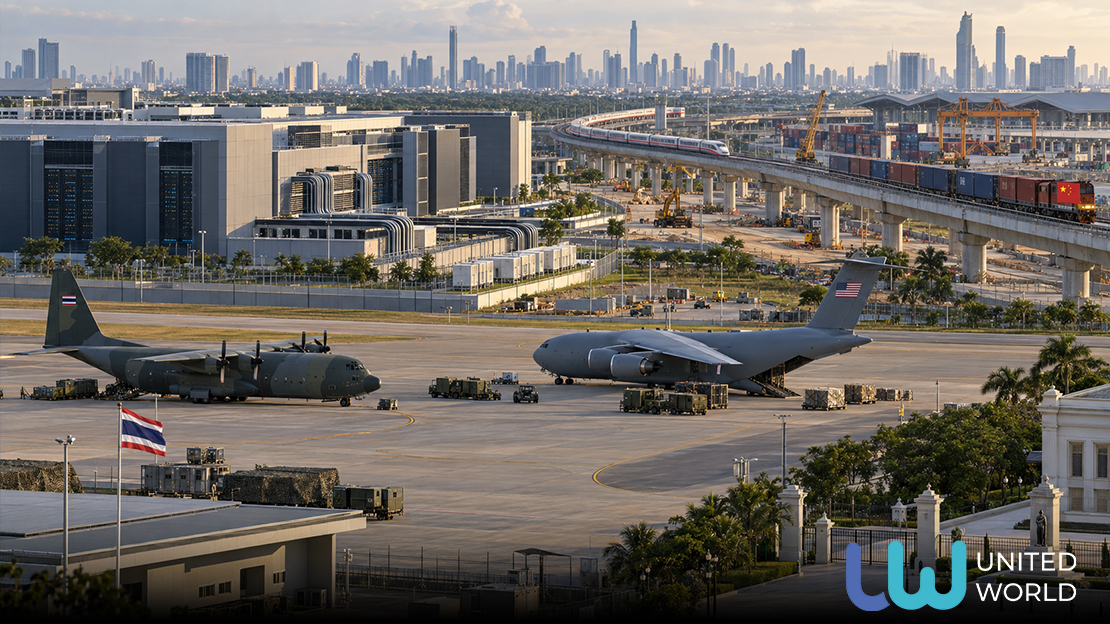
Nevertheless, times change. Rising geopolitical influence of China and Beijing’s growing activities all across Southeast Asia have caused Washington to reassess its commitment to values and think of strategic implications. Economic dependency of Thailand on China, military cooperation between Beijing and Bangkok, and geographical location of the latter as a strategic crossroads within China’s connectivity projects such as the BRI have prompted the US to rethink its strategic approach. Hence, while the US maintains its stance on democratic backtracking, it is trying to engage more deeply with Thailand for regional stability and strategic benefits.
The trend is observed throughout the entire region, and US policies in the Indo-Pacific are increasingly driven by competition with China. With this new approach, the alliances are valued not by how well they uphold democratic values, but by their strategic importance, and the US will be ready to cooperate with whatever government Thailand produces as long as there is a match between U.S. interests and those of Bangkok.
This trend manifests itself in the change of actions taken. First of all, US military exercises in Thailand have resumed. Secondly, high-level visits have become more frequent. Moreover, Thailand’s infrastructure development and the formation of a digital economy framework have become topics of discussion during meetings between Washington and Bangkok. On the other hand, criticism of Thailand’s anti-democratic policies has been toned down, and even if human rights are still brought into discussions, they do not have the same weight as before.
In such a way, the US attempts to strike a balance between its principles and geopolitical needs. This leads to controversial questions arising. For example, the need to maintain regional balance of powers might be among them. Thailand is strategically located on the continent of Southeast Asia, next to sea lanes, influential in the region, and historically linked to the US through institutions. If the United States backs off, the balance of powers might shift, and China might benefit from this.
Moreover, neglecting the principle of democracy causes reputational risks for the US. For years, the United States has been a value-driven country that seeks to spread its principles of democracy all around the globe. A transactional policy would make the Americans appear as hypocritical and inconsistent in their positions. The newly energized youth and civic organizations will feel disappointed in Washington for failing to live up to its values.
Also, this approach brings only marginal gains. In its foreign policy, Thailand tries to remain independent and balanced. No matter what color elites Bangkok chooses to govern its population, they will continue to pursue their own national interest, using the resources of both China and the United States without being committed to either party. Hence, strategic engagement is not enough, and influence should be pursued through building trust and developing institutional ties.
Conclusion
With rising tensions in geopolitics, the US starts balancing its principles against the need for cooperation. Hence, democratic conditionality becomes negotiable as far as it concerns practical issues of geopolitics. While it might be effective in achieving short-term goals, it risks undermining the foundation of US engagement in Thailand.
Consequently, a long-lasting partnership should combine geopolitical priorities and proper recognition of Thailand’s democratic developments. In an increasingly competitive Indo-Pacific, it might not be feasible, meaning that the US influence would be tactical instead of transformational, and welcomed on a war-game level, but not on a social one.