


By Yıldıran Acar, Political Scientist
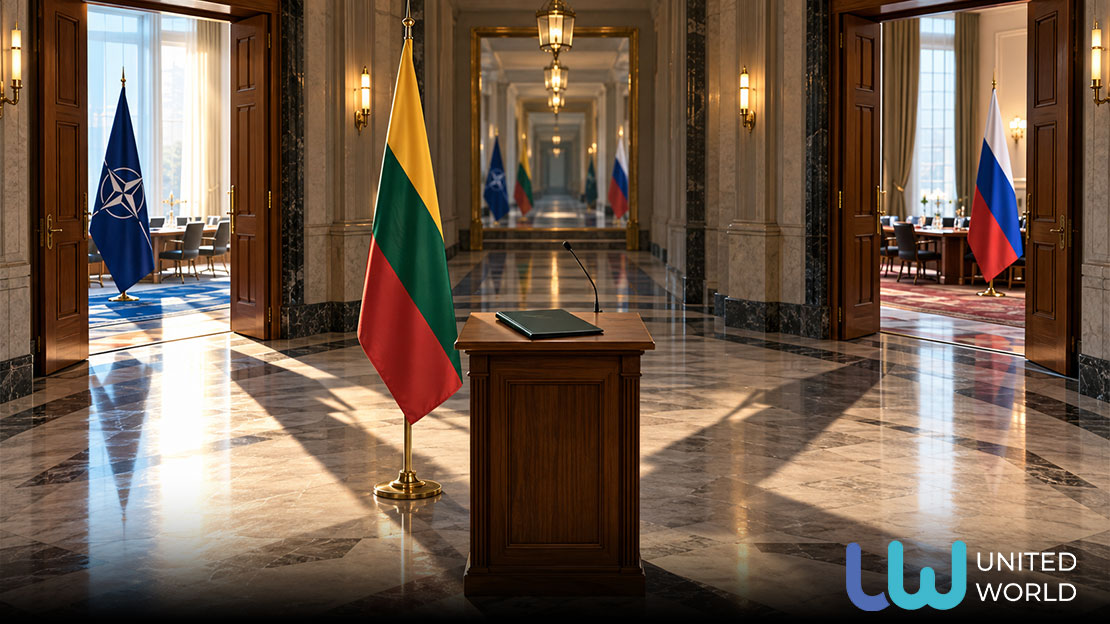
The vote held in the Lithuanian Parliament on September 22, 2026, was a notable example of the changes taking place in the European security environment. The Lithuanian Parliament backed a proposal to remove the constitutional provision prohibiting the deployment of nuclear weapons and foreign military bases on Lithuanian territory. The measure received 99 votes in favor, 13 against, while five lawmakers abstained.
It is important to stress, however, that this is not yet a final constitutional amendment. The process requires two further votes. The first is scheduled for October 6, 2026, and the final vote is expected on January 12, 2027. At least 94 of the 141 members of parliament must support the amendment for it to pass. In other words, there are currently no nuclear weapons stationed in Lithuania, and the parliamentary vote does not by itself authorize their deployment. The political message, however, is clear: Vilnius does not want to remain outside NATO’s nuclear deterrence framework.
It would be insufficient to view this development solely as part of Lithuania’s national defense policy. In recent years, the discourse surrounding the Russian threat has gained increasing prominence across the Baltic states. Defense spending has risen, NATO’s military presence in the region has expanded, and studies of Russia’s military capabilities have become an increasingly visible part of political and public debate. The US approach to the region should also be viewed in this context.
For Washington, the Baltic states are more than NATO’s eastern frontier. They are also an area where the alliance’s political and military cohesion in the face of Russia is demonstrated. Maintaining the US military presence, strengthening defense ties with the countries on NATO’s eastern flank and reinforcing deterrence are all part of this broader approach. Yet a lasting military presence also requires a supportive political environment. Keeping the perceived Russian threat at the center of public and political debate reinforces confidence in NATO. Russia consequently remains at the heart of the region’s security discussion.
Understanding Russia or Producing Fear of Russia?
Studying Russia’s military capabilities is not, in itself, an act of propaganda. The performance of the Russian military in the war in Ukraine, its electronic warfare capabilities, unmanned systems, missile technologies and cyber capabilities are all legitimate subjects of serious research. What also matters, however, is which conclusions are drawn from such studies.
I am not speaking about this merely as an outside observer. For nearly two years, I conducted academic work in the Lithuanian city of Kaunas. During that period, I had the opportunity to see firsthand how central Russia, security and NATO relations had become within the university environment.
It would obviously be wrong to place all academics or all research conducted in Lithuania into the same category. At the same time, it is difficult to argue that academia exists entirely apart from the political environment in which it operates.
The sources used in an academic study matter, but so do the sources that are left out. The events given prominence, the concepts chosen and the interpretations presented in the conclusions can all shape how a reader understands an issue. The presence of a bibliography does not, by itself, make every interpretation in an academic paper objective.
I encountered examples of this during my own work. Some studies of Russia’s military capabilities do more than examine what Russia can actually do; they interpret those capabilities within a particular political framework. In this way, the image of Russia as a powerful, unpredictable and continually expanding threat becomes further established. At first glance, such an approach may appear to portray Russia as stronger. Its political effect, however, can be quite different. The greater the perceived Russian threat, the stronger the perceived need for NATO as a security provider. This is particularly visible in the Baltic states.
Academia as an Element of Hybrid Warfare
When hybrid warfare is discussed, the focus is usually on disinformation, cyberattacks, economic pressure, proxy actors or military methods. Yet the production of knowledge has also become an important part of this broader contest. It would be wrong to describe academia as a whole as an instrument of hybrid warfare. Academic concepts and definitions of threats, however, can influence national security policies over time. When security policy is repeatedly explained through the same threat, that threat gradually becomes more firmly rooted in public consciousness.
One particularly striking feature is the way Russia is sometimes portrayed as a power far greater than its actual capabilities might suggest. Claims that Russia is exceptionally successful in hybrid warfare, far ahead of its competitors in electronic warfare, or capable of causing serious damage to Western critical infrastructure can influence public perceptions even when they appear within an academic debate.
When a gap emerges between a state’s actual capabilities and the image constructed around them, security policies can begin to respond not only to objective realities but also to the perception that has been created. This is where the information dimension of hybrid warfare becomes particularly important.
Constantly praising a country or constantly demonizing it does not necessarily produce the same result. But portraying it as far stronger, more dangerous and more unpredictable than it actually appears can also contribute to creating fear on the other side. From this perspective, academic literature does more than produce knowledge. It can also help shape the intellectual environment in which political decisions are made.
Lithuania’s Nuclear Move
Lithuania’s initiative to amend the constitutional restrictions concerning nuclear weapons also needs to be understood against this background. From NATO’s perspective, strengthening nuclear deterrence is intended to reinforce the alliance’s ability to respond to potential threats from Russia. For Lithuania, such a change signals an aspiration to assume a more prominent position within NATO’s security framework. It would be difficult to expect Moscow to interpret the process in the same way.
For Russia, the expansion of NATO’s military infrastructure toward its borders has long been one of its central security concerns. The growing military presence in the Baltic states, combined with the possibility of creating a legal basis for the deployment of nuclear weapons, could lead to an even tougher assessment of the regional security environment in Moscow.
Another development following the Lithuanian vote also deserves attention. Russia’s state news agency RIA Novosti published an article discussing possible Russian military and nuclear attack scenarios against Lithuania. The article was removed shortly afterwards. The agency said that the text did not correspond to its editorial policy or to Russia’s state policy. That detail is significant. It suggests that an effort is being made to distinguish official state policy from excessively confrontational security rhetoric appearing in the media. The broader direction in Europe, however, remains unchanged.
The Baltic states are becoming more closely tied to NATO. NATO is expanding its military capabilities in the region. The United States is maintaining its influence on the alliance’s eastern flank. Moscow, meanwhile, views these developments as an expansion of military infrastructure closer to Russian territory. The result is a process that increasingly feeds into itself. Lithuania seeks greater security and therefore relies more heavily on NATO. As the alliance’s presence becomes stronger, Russia feels increasingly threatened. As Moscow’s security concerns grow, the Baltic states become even more inclined to deepen their reliance on NATO. As this cycle continues, Europe’s security environment becomes increasingly rigid.
During my two years of work in Kaunas, one of the most striking things I observed was precisely this. Security debates are not shaped only by decisions taken by governments. University research, the language used by experts, the issues highlighted by the media and the threats discussed in public all influence how people understand the world around them. Over time, the same idea begins to appear through different channels. It can be found in an academic paper, a television program, a newspaper article or a politician’s speech. Gradually, a particular understanding of security becomes part of everyday public thinking.
This is one of the less discussed dimensions of hybrid warfare. The struggle is not confined to the battlefield. It also extends to the way societies interpret events and the concepts through which they make sense of what is happening around them. Lithuania’s initiative on nuclear weapons should therefore not be viewed as an isolated decision. It reflects a broader transformation in how the Baltic states understand their security.
As the perception of the Russian threat grows, NATO’s role in the region becomes stronger. As NATO’s role expands, Moscow’s perception of the alliance becomes more hostile. That, in turn, reinforces the Baltic states’ desire to tie their security even more closely to NATO. This relationship will be one of the important factors shaping European security in the years ahead.
Lithuania’s constitutional amendment process is not yet complete. But the September 22 vote has already demonstrated how rapidly the security outlook in the Baltic states is changing. Understanding this process requires looking beyond military decisions to the political language surrounding them, the media and the academic environment.
Once a particular understanding of security becomes deeply rooted in society, it is no longer confined to government policy. The knowledge produced by universities, the language used by the media and the way the public interprets events gradually begin to operate within the same framework.