


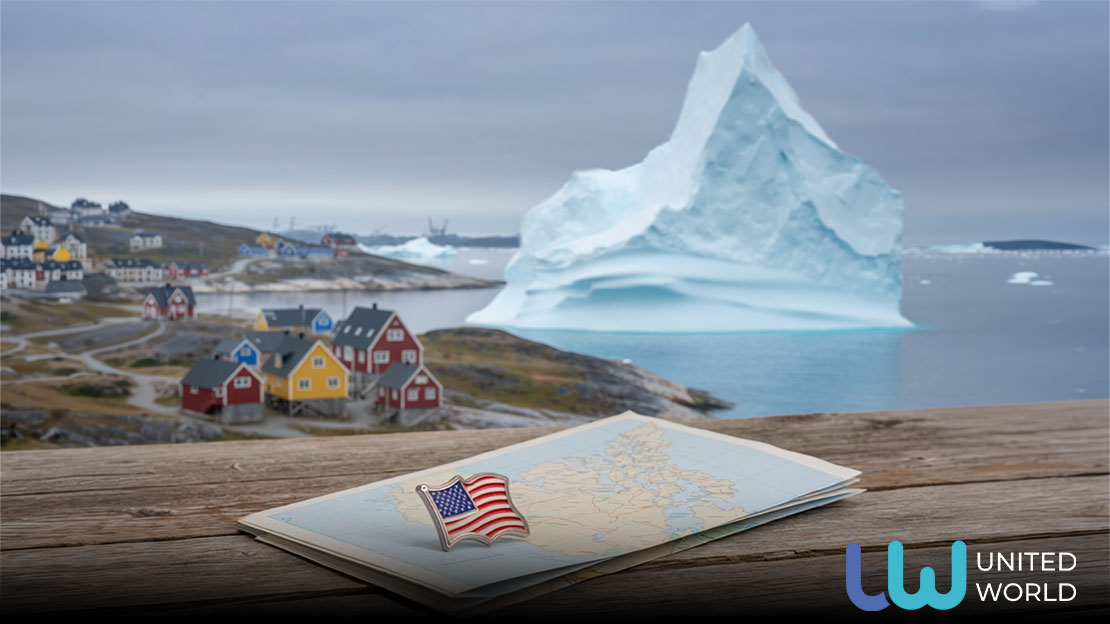
On September 18, the US and Denmark announced a deal on Greenland.
Trump announced on Truth Social “The United States of America has entered into an Agreement with The Kingdom of Denmark, and Greenland, that gives the United States permanent control over security, and all other needs, in Greenland, completely addressing ALL of our many U.S. concerns”. He added “This is a dream come true for the United States of America, one that is very important, historic, and special.”
Trump also said that the deal includes a rule that “no US adversary could maintain a military presence in Greenland” or “make sensitive investments in Greenland, without our express written approval”.
Denmark’s Prime Minister Mette Frederiksen said she was “pleased that there is a prospect of a good agreement”. She said they expect to sign an official agreement with the US next week.
UWI author, historian and political scientist Associate Professor Mehmet Perinçek commented on the issue. We share his evaluation with our readers.
————————————————————————————————————————————
Greenland is important to the US for two main reasons.
The first stems from the growing competition over the Arctic.
As known, the melting of Arctic ice is opening up new shipping routes that could play an increasingly important role in global trade. Russia is one of the key actors in the region. Russia and China could develop major projects and partnerships in the Arctic Ocean, and this would deal a serious blow to the efforts of the US and the Atlantic powers to maintain control over global trade routes. One of the main reasons behind Trump’s interest in Greenland is to limit or prevent the damage the opening of the Arctic Ocean could cause to US interests. Trump is clearly concerned about cooperation between Russia and China. In fact, it can be argued that a number of proposals he has made to Russia, including the idea of building a bridge between Alaska and Russia, are aimed at preventing China-Russian cooperation in the Arctic.
The second issue exposes another US vulnerability: rare earth elements. The US is in a considerably weaker position, given that China enjoys major advantages in this regard. The significant depletion of US’ stockpiles during its war with Iran has added to this vulnerability. The US wants to replenish the stockpiles, and this requires rare earth elements. And Greenland is extremely rich in these resources. This is the second main reason why Trump has said that the US could occupy Greenland, disregarding international law and even threatening its own “allies.”
Because the US has fallen behind both in the competition over Arctic shipping routes and in access to rare earth elements, it sees gaining control over Greenland as a possible way out. The deal on Greenland points to a degree of consensus between the US and Europe, although how long it will last and what form and scale it will take remain open questions.
The US’s latest move can be seen as an attempt to assert global dominance, control the world’s trade routes, and put pressure on its rivals.
It should be emphasized, however, that in a world where China, Russia, Iran and Türkiye act together, these US moves can be thwarted. “TRÇİ” alliance (Türkiye–Russia–China–Iran alliance) could both obstruct these US objectives and eliminate the threat posed by the US and the Atlantic powers of dragging the world into a global war.